
About Low Brass Lessons
Low Brass Lessons was built to give families a clearer, more supportive way to find high-quality low brass instruction. Our studio connects students with qualified trombone, euphonium, and tuba instructors while keeping scheduling, communication, safety standards, and long-term musical growth at the center of the lesson experience.
This page explains how the studio works, what families can expect from our instructors, and why our online and in-person lesson options are designed to support students over time.
Stronger Low Brass Fundamentals
Students receive focused help with tone, articulation, rhythm, range, flexibility, breathing, posture, and overall musicianship in a way that builds off their current strengths.
More Productive Student Practice
Lessons help students understand not only what to practice, but how to practice effectively so their effort leads to clearer progress and achievement.
More Confidence for Low Brass Students
Confidence develops from clarity of expression and modeling technical excellence. Our instructors embody these qualities and push students to be more confident in their playing.

A Low Brass Lesson Studio Built for Better Fit
One of the biggest strengths of Low Brass Lessons is that families are not limited to one teaching schedule or one instructional style. Our instructor network helps students find a teacher who fits their instrument, learning style, schedule, and goals.
This gives families more flexibility over time. More instructor options can mean better availability, more consistency, and stronger support as a student’s needs change.
Multiple instructor options create a more flexible model for private lesson scheduling, even when families have busy calendars.
Students can work with an instructor whose teaching style fits their personality, goals, and musical needs.
Clear instructor standards help families feel confident about lesson quality, professionalism, and student safety.
Low Brass Instructors Are Selected With Clear Standards
Low Brass Lessons is built around the idea that families should feel confident not only in the lesson format, but also in the qualifications and professionalism of the instructors they encounter.
Educational Preparation
Instructors are selected for strong musical and educational backgrounds, including standards such as formal music training and, where applicable, music education degree preparation or completion.
Student-Facing Professionalism
Instructors should be able to communicate clearly, teach responsibly, and represent the studio in a way that is organized, encouraging, and dependable for families.
Safety and Trust
Student safety matters. When considering instructors who work directly with young musicians and families, we value requirements such as a valid fingerprint clearance card when applicable.
Instructional Fit
Our instructors are able to demonstrate the ability to teach developing musicians patiently, clearly, and with attention to long-term growth. We ensure that every instructor has a clear pedagogical approach.
Online and In-Person Low Brass Lessons Each Offer Real Advantages
In-Person Low Brass Lessons
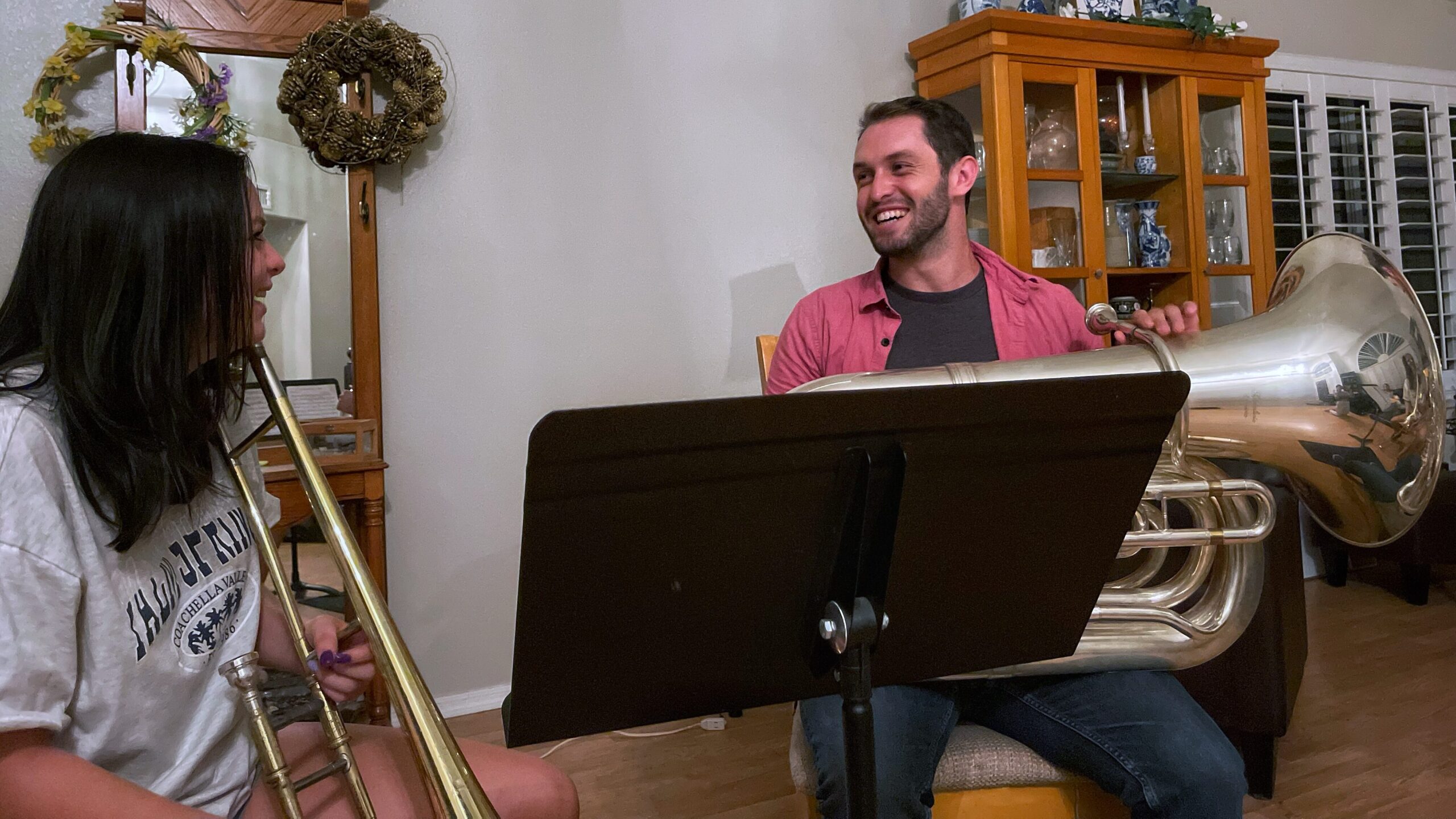
A strong fit for students who benefit from the energy of being in the room. We account for instructor travel and include an additional $5 charge per lesson paid directly to the instructor to account for travel costs.
Schedule Private Low Brass LessonsOnline Low Brass Lessons

Online lessons are a practical and effective option for families who need location flexibility. Quality instruction remains the top priority, and proper equipment helps lessons feel more seamless. We recommend that online students use a USB microphone when possible.
Our Recommended Student MicrophoneA Private Lesson Experience Designed for Student Growth
Lessons Week to Week
Our model works best for families who want a long-term educational plan for their student’s growth. We offer free 30-minute consultations so families can meet the instructor, discuss scheduling, and get a clear sense of instructor compatibility.
Many students enroll in weekly or biweekly lessons for steady progress throughout the year. Families can also schedule one-off lessons when they want to explore a new perspective or receive focused support on specific music.
Thoughtful Instruction
Lessons are meant to support progress over time, not just deliver occasional tips. Students should leave with direction, encouragement, and a stronger sense of what growth looks like.
Flexibility Without Losing Quality
Online and in-person options make the studio more accessible and accommodating. Lesson content and quality of instruction remains consistent between each lesson format, making them seamlessly interchangeable.
A Studio That Grows With You
As goals become more advanced, students benefit from long-term structure, support, and a clear low brass curriculum built around continued growth.