Low Brass Curriculum for Private Lessons
Our curriculum helps trombone, euphonium, and tuba students grow through fundamentals, student materials, and original Pocket Orchestra repertoire.
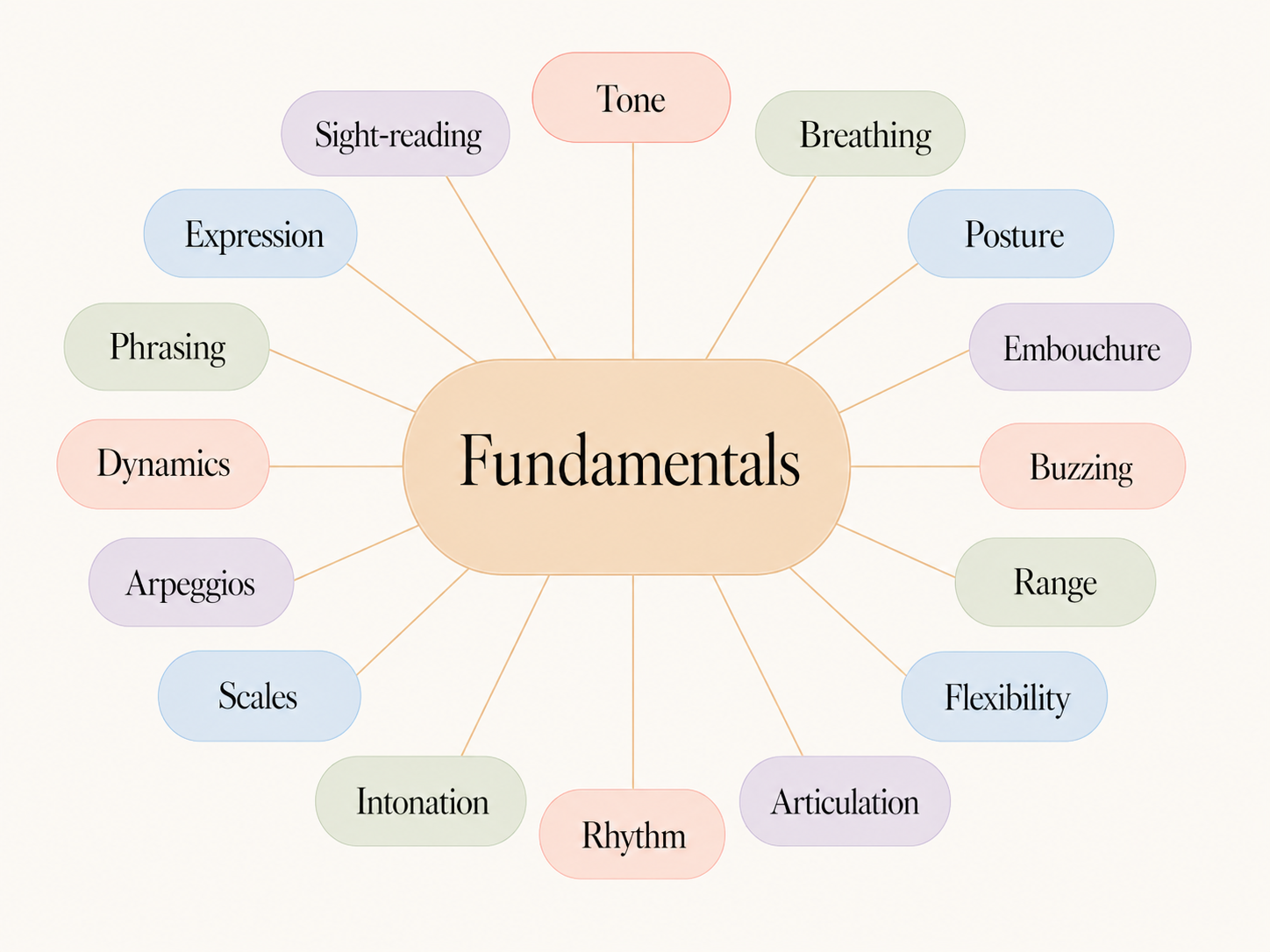
Fundamentals
These skills form the foundation of strong low brass playing. Students build tone, breathing, articulation, rhythm, flexibility, and posture with clear guidance from their instructor.
Student Materials
Student materials keep lessons connected to what the student is actively preparing. This may include school music, audition etudes, excerpts, scales, or solo work.
Pocket Orchestra
Pocket Orchestra gives students original low brass music that helps them apply fundamentals in a more engaging and musical setting.
Student Materials Keep Low Brass Lessons Relevant

Audition preparation helps students build confidence, accuracy, and consistency before important performance opportunities.
Students often need help making school ensemble music feel more polished and secure. Lessons support classroom repertoire while building stronger long-term habits.
Excerpts help students study important musical passages with more detail. They also give instructors a focused way to teach style, rhythm, tone, and musical decision-making.
Scales and arpeggios support nearly every part of musical development. These patterns help students improve technique, sound, intonation, and confidence.
Pocket Orchestra Repertoire for Low Brass Students
The Pocket Orchestra series gives students original low brass repertoire beyond standard lesson materials. These pieces are commissioned for Low Brass Lessons and written with developing students in mind.
Commissioned for Low Brass Lessons
These pieces are created specifically for our students. The goal is to help low brass players build artistry through music written for their growth.
Accessible Low Brass Repertoire
The music encourages developing students to apply fundamentals in a setting that feels engaging, musical, and rewarding.
A New Kind of Lesson Literature
This collection gives students a distinct musical experience while supporting the same fundamentals they work on in private lessons.
Explore the Pocket Orchestra Catalog
Browse original low brass sheet music and accompaniment resources created for student growth, lesson work, and independent practice.
Explore Low Brass Sheet MusicLow Brass Curriculum FAQs
Does every low brass lesson follow the same plan?
No. The curriculum gives each lesson clear priorities, but instructors still adapt the material to the student’s needs, goals, and current music.
Do lessons still focus on fundamentals during audition or school music preparation?
Yes. Fundamentals support every piece of music a student plays. Even when a lesson focuses on school music or audition material, students continue building the skills behind that music.
What makes Pocket Orchestra different from regular sheet music?
Pocket Orchestra is built for students who study through our studio. The music gives students a creative, structured way to apply low brass fundamentals.
Do private low brass lessons need a dedicated curriculum?
A clear curriculum helps students avoid stagnation. It gives lessons structure while still leaving room for each student’s goals, music, and pace. Families can also explore music education resources from the National Association for Music Education.